
Local travel guide
Scuba Diving in Cozumel: A First-Timer’s Guide
Cozumel is famous for drift diving and clear Caribbean reef experiences, but first-time visitors should choose an operator and dive plan based on certification, recent experience, current, boat logistics and protected-area rules.
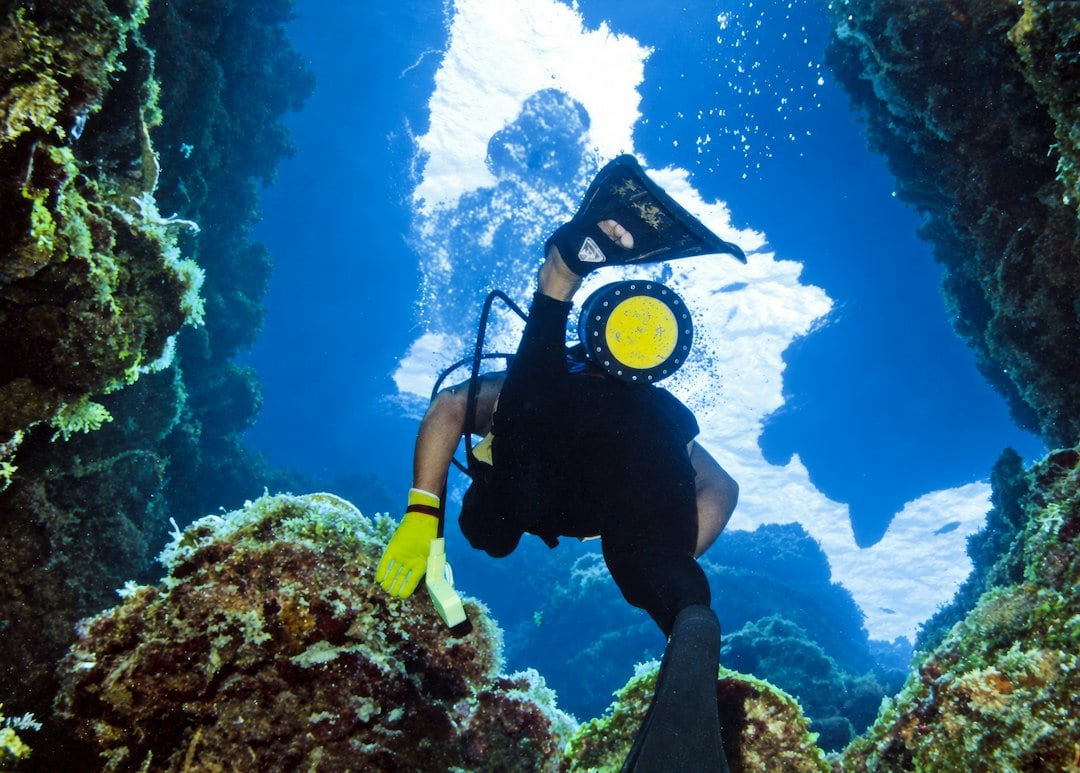
Why Cozumel feels different
The island's reef system sits along the western and southern side of Cozumel. Clear water and current can create long, relaxed drifts for experienced divers.
That same current means a diver who is comfortable in a calm quarry or protected bay should still tell the divemaster about limited drift experience.
Choosing an operator
Ask before booking:
- Is the operator authorized for the protected area?
- What certification is required for the planned sites?
- What recent diving experience do they expect?
- How large is the group?
- Is equipment included?
- Where does the boat depart?
- What happens if conditions change?
- What is the emergency and oxygen setup?
A good operator should be comfortable answering those questions.
Local Expert Tip
Scuba Life Cozumel
“The reef that sounds most famous is not always the best choice for that particular day or diver.”
JP from Scuba Life Cozumel makes an important point for first-time visitors: the reef name you recognize from the internet is not automatically the right reef for your first dive. Conditions can change quickly, and sites such as San Juan, Barracuda, Maracaibo and Punta Sur can involve stronger or more variable currents. Their advice is to let an experienced local Divemaster or Instructor match the site to your certification, recent experience, comfort level and the conditions that day.
Scuba Life also recommends asking operators about licensing for the Cozumel National Marine Park, staff qualifications, guide-to-diver ratios, rental-equipment condition, onboard safety equipment and boat setup before booking. They keep their own boats to a maximum of eight divers and up to four divers per instructor.
For weather, they note that passing tropical rain usually does not ruin a dive day, while strong northerly winds — locally called *Nortes* — matter much more because they can create heavy swell and occasionally cause harbor closures.
Their simplest planning advice is also one of the best: judge the operation by the quality of its communication before you book. Clear answers about boats, equipment, safety procedures and your experience level are a useful signal that the rest of the dive day will be handled professionally.
Local takeaway: Choose the operator first. Let the conditions and your experience level determine the reef.
Dive With Martin
Martin King of Dive With Martin recommends paying close attention to how an operator responds when a diver asks to go beyond their certification or training. A professional operator should set appropriate limits rather than agree to a dive that exceeds the diver's preparation.
He also suggests choosing the type of experience you actually want before booking: small-group or boutique versus budget-focused, group size, what is included, and how much personal attention you expect. For newer divers, his advice is simple: know your limits and do not let peer pressure push you into a depth or site that does not match your training.
One practical winter detail travelers may underestimate is the ride back after a second dive. Even in the Caribbean, wind on the boat can feel surprisingly cold, so a light windbreaker can be useful.
Local takeaway: Ask questions that reveal the operator's safety culture, choose the group style that fits you, and stay within your training.
Cozumel Dive School
Kenneth Stromberg, owner of Cozumel Dive School, pointed us to their local guidance on seasonality and Marine Park rules. Their practical takeaway for first-time divers: Cozumel is diveable year-round, but water temperature, crowds and weather vary by season, so the best trip depends on the experience you want. Inside the protected reef system, good buoyancy matters and divers should avoid touching coral, feeding wildlife or collecting anything. Ask your operator to confirm current Marine Park rules and conditions before the dive.
Salty Endeavors
Henry C. Schultz III, owner of Salty Endeavors, says first-time visitors often assume cruise-ship traffic makes the entire island feel crowded. His local perspective is that the biggest cruise-hour foot traffic is concentrated around the downtown waterfront, while divers who leave that corridor — or stay overnight — often experience a much quieter Cozumel.
When choosing a dive operator, he recommends asking whether the operation and boat are authorized for the Marine Park rather than relying only on a social-media presence. That point is independently supported by CONANP, which tells visitors to use authorized service providers and boats inside Parque Nacional Arrecifes de Cozumel.
His strongest safety advice is simple: carry your own SMB/DSMB and know how to use it. Cozumel's current-driven diving makes surface visibility and pickup procedures important. Divers Alert Network recommends an SMB and reel for current dives and emphasizes following the operator's live-boat pickup instructions.
Local takeaway: Verify authorization, understand the pickup and separation plan, and do not treat an SMB as equipment you can figure out for the first time underwater.
Aquamarinas Divecenter Mexico
Volker Pohl of Aquamarinas Divecenter Mexico highlights a simple but important reef-protection rule: do not touch living marine life. He says divers generally understand the national park rules, but some still ignore them, including the prohibition on touching underwater life.
Local takeaway: Keep your hands off coral and marine animals, maintain buoyancy and follow the dive guide's park briefing.
Certification and refresher dives
Do not overstate your experience to reach a particular reef.
If it has been a long time since your last dive, ask whether a refresher, check dive or easier first site makes sense. The goal of the first Cozumel dive is to understand the conditions, not prove something.
Drift diving
In a drift dive, the group generally moves with the current instead of swimming back to a fixed entry point.
Stay with the divemaster, maintain good buoyancy and follow the operator's briefing about ascent and pickup procedures. Ask how separation is handled and when you should deploy your SMB/DSMB.
Reef protection
CONANP's visitor guidance for Arrecifes de Cozumel emphasizes using authorized service providers and boats inside the protected area, along with protecting coral and marine life.
Good buoyancy control is not only a diving skill here; it is reef protection.
What non-divers can do
A mixed group does not have to split for the entire day. Some operators can coordinate snorkeling or a separate activity, but confirm what is actually offered rather than assuming everyone can join the same boat.
Ferry-day diving
Diving from a Playa del Carmen base is possible, but the ferry creates another timing constraint. Confirm the dive-shop meeting point and whether your planned return leaves a comfortable margin.
From Cancun Airport, a smooth taxi-and-ferry connection can put you in Cozumel in about two hours: roughly 40 minutes to Playa del Carmen, around 40 minutes on the ferry, plus the short walk, boarding and transfer time. Treat two hours as a realistic good-case estimate when the connection lines up, not a guaranteed minimum.
As of October 5, 2026, Winjet lists a 10:00 PM Playa del Carmen-to-Cozumel departure, while Ultramar's current schedule ends earlier at 9:00 PM. That makes 10:00 PM the latest scheduled passenger ferry today, but ferry times are subject to change. Check the operators' current schedules before relying on a late same-day connection.
Multiple dives plus a ferry return can make for a long day.
Flying after diving
Follow your training agency and dive operator's current guidance on surface intervals before flying or going to significant altitude. Do not schedule a flight immediately after diving.
Bottom line
For a first Cozumel dive, choose the operator before choosing the famous reef. A well-matched site, clear briefing and conservative plan will show you more of what makes the island special than chasing a name that does not fit your experience.
Use the Cozumel hub to coordinate diving with ferry, lodging and island transportation.