
Local travel guide
Puerto Morelos Weather, Sargassum and Reef Conditions: What to Check Each Day
Prepare for Puerto Morelos weather, heat, storms, beach flags, marine closures, sargassum, mosquitoes and emergency planning.
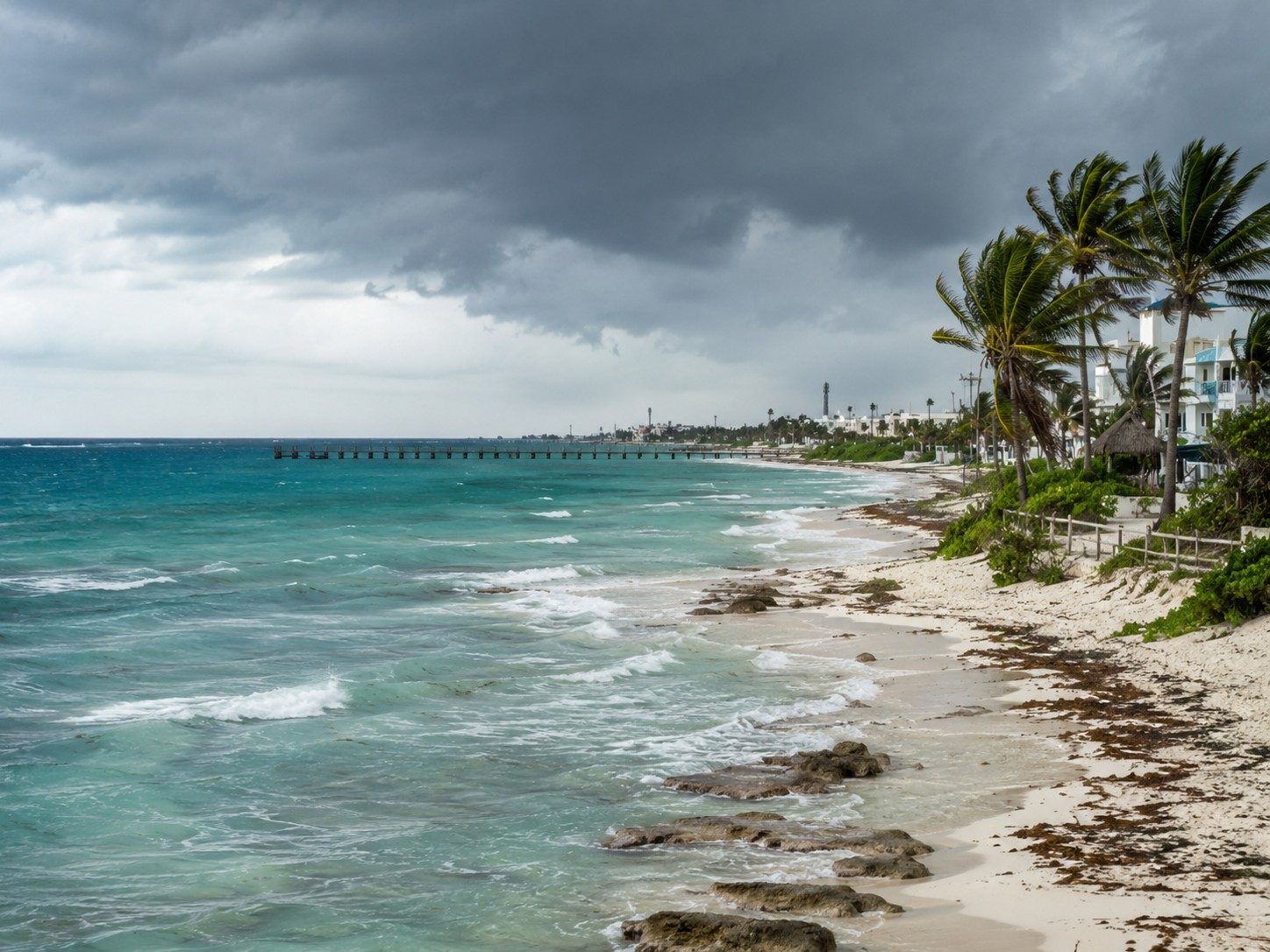
Sargassum: check the beach, not just the season
Sargassum changes quickly. Wind, currents, cleanup work and shoreline shape can make nearby sections look different on the same day.
Before committing the whole day to one beach, use several signals:
- the Accidental Gringo Sargassum Tracker
- recent local reports or photos
- your hotel or accommodation’s same-day report
- a live camera when available
- what you actually see and smell when you arrive
Avoid absolute claims such as “Puerto Morelos has no sargassum” or “the whole beach is ruined.” Conditions can be highly localized.
Our Puerto Morelos Beach Guide helps with the shoreline decision itself.
Reef days: the beach and reef are different decisions
Puerto Morelos has a protected reef offshore. The conditions that matter to a snorkeling boat are not necessarily obvious while you are standing beside the plaza.
Before leaving for a reef reservation, ask the operator whether the harbor and reef activity are operating normally. If the operator cancels for wind or marine conditions, do not pressure them to go.
Our Puerto Morelos Snorkeling Guide explains what to ask before booking.
Rain forecasts can look worse than the actual day
A tropical forecast may show rain or thunderstorms without meaning it will rain continuously from breakfast through dinner.
Use the hourly forecast and radar where available rather than treating a rain icon as an all-day prediction.
But thunderstorms deserve respect. If thunder is audible or lightning is visible, get out of the water and off exposed beaches, boats, piers and open platforms.
Wind can matter more than rain
For reef trips and other marine activities, wind and waves may matter more than whether the forecast shows a shower.
A partly cloudy day with rough marine conditions can be a poor boat day. A day with a brief shower can still have excellent water activity windows.
That is why I separate “beach weather” from “boat weather.”
Heat is easy to underestimate
Heat and humidity wear people down gradually, especially after snorkeling, walking in direct sun or drinking alcohol during the day.
Make the day easier:
- walk earlier when possible
- use shade
- drink water regularly
- wear a hat and protective clothing
- rest after water activities
- watch children and older travelers carefully
- limit alcohol during high heat exposure
Mosquitoes after rain
Mosquito activity can increase around vegetation and standing water, particularly after rain and near dusk.
Bring appropriate repellent and use screened or air-conditioned spaces when practical.
If you are heading inland toward the Ruta de los Cenotes, insect protection becomes even more useful.
See our Ruta de los Cenotes Guide.
Tropical storms and hurricanes
During significant tropical weather, stop relying on normal vacation planning.
Follow official civil-protection instructions and information from your accommodation, airline and transportation provider.
Protect passports and important documents, keep devices charged, maintain necessary medication and drinking water, and do not drive through flooded roads.
If an evacuation or closure is ordered, follow it.
What if today’s beach conditions are bad?
Do not force the beach because it was on the itinerary.
Puerto Morelos gives you alternatives. You can eat in town, walk the plaza, change beach sections, postpone the reef, use the pool or consider the cenote route if inland weather and roads are appropriate.
Our One Day in Puerto Morelos Itinerary is deliberately built around flexible pieces.
Departure-day weather
This is where travelers sometimes create unnecessary risk.
Heavy rain, flooding, roadwork or traffic can make the airport trip slower than expected.
On departure day:
- confirm the flight and terminal
- reconfirm transportation
- add a weather and traffic buffer
- charge the phone
- keep travel documents dry and accessible
- avoid a distant cenote or complicated final excursion
For transport planning, see Cancun to Puerto Morelos Transportation.
My three-question morning check
Every morning, answer these separately:
- Do I like the beach conditions?
- Is the water activity operating?
- Is the weather safe?
You do not need all three answers to be identical to have a good day.
Frequently asked questions
What is the best month for perfect Puerto Morelos beach conditions?
There is no month that guarantees calm water, no rain and no sargassum. Choose the broader season that suits your trip and make beach decisions using current conditions.
Does sargassum affect Puerto Morelos every day?
No. Conditions vary by day and shoreline. Use current observations instead of assuming an entire season is either clear or covered.
Can the reef be closed when the beach looks fine?
Yes. Offshore marine conditions and harbor decisions are separate from what the water looks like from shore.
Where should I check sargassum?
Start with the Accidental Gringo Sargassum Tracker, then combine it with same-day local information and what you observe at the beach.
Is Puerto Morelos safe during a tropical storm?
Conditions depend on the specific event. Follow official civil-protection and accommodation instructions rather than generic travel advice.
Accidental Gringo tip
Do not let one weather-app icon decide the day. Check the beach, the reef and the sky separately.
Check the day you go: Forecasts, tropical alerts, beach flags, sargassum levels, cleanup operations, harbor status, reef access, flooding, airport status and emergency contacts can change quickly. Use current official and local information rather than an old snapshot.